
Sector covered : Skills development, Education (ECD, Non-Formal Education, Literacy and Numeracy)
At the heart of AGRAJATTRA’s efforts lies its comprehensive training programs aimed at equipping illiterate and unemployed individuals with practical skills. Through meticulous training sessions, participants are proficiently trained in various trades, transforming them into skilled home-based workers capable of crafting export-quality items such as Nakshi Kantha, Ornaments (Seashells, Wooden, Bead), Jute Items (bags, Purses, decorative items, etc.), Tablemats, Ethnic Clothing, Tupi, Pompom, Croset Flowers, Tassel, etc.
Central to AGRAJATTRA’s operational model is the facilitation of work orders. Team leaders liaise with AGRAJATTRA to obtain assignments, which are subsequently distributed among home-based workers within their respective groups. This collaborative approach not only streamlines production but also empowers individuals to earn a sustainable livelihood from the comfort of their homes.
Through its unwavering commitment to serving the unemployed and underprivileged, AGRAJATTRA catalyzes socio-economic empowerment. By imparting invaluable skills and fostering a spirit of entrepreneurship, AGRAJATTRA enables formerly unskilled individuals to contribute meaningfully to national development. Their newfound expertise not only enhances domestic productivity but also generates foreign exchange earnings, thus positioning them as valuable contributors to the nation’s economy. AGRAJATTRA stands as a beacon of hope, transforming lives and communities through the transformative power of skill development and economic opportunity.
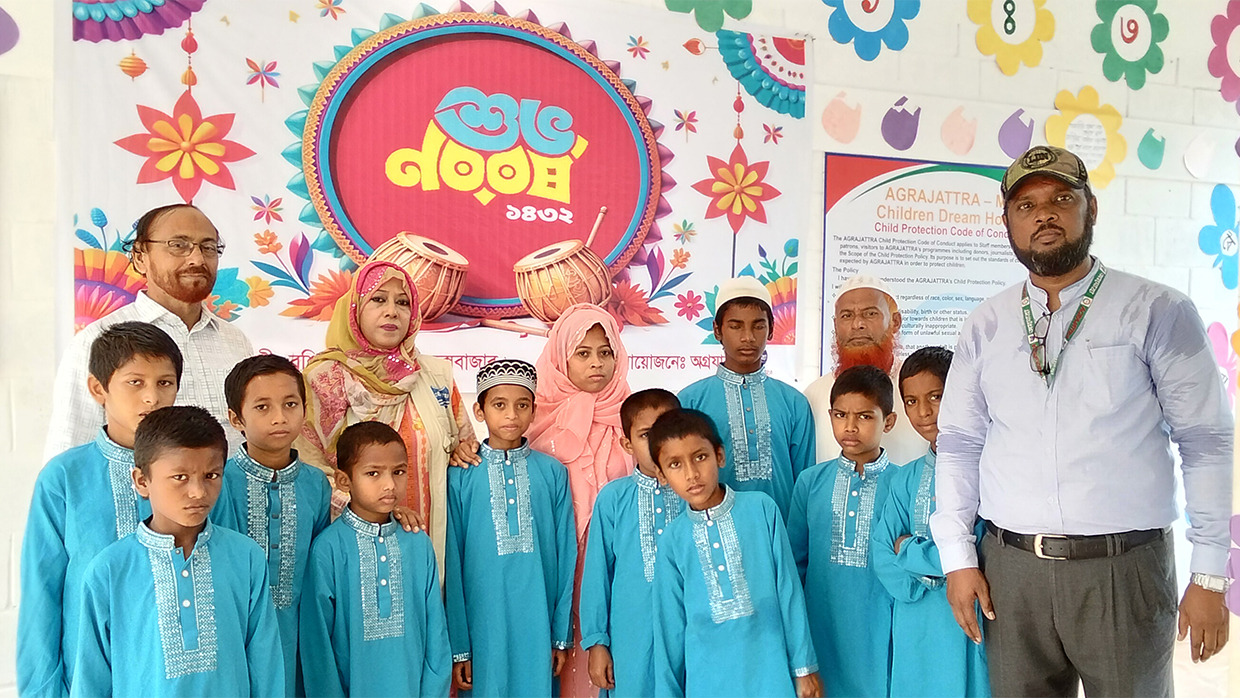
Agrajattra has implemented Non Formal Education (NFE) & Skill Development Training (SDT) to Hazardous children. Early child development (ECD) program was the major and important program of AGRAJATTRA. In this line AGRAJATTRA has overall more than 12 years working experience for implementing education program. AGRAJATTRA is implementing education program both host and Rohingya community.
AGRAJATTRA follows the Mayanmer curriculum in Rohingya camps according sector instructed guideline. At present; AGRAJATTRA is also implementing the education program at Host community namely Maheshkhali Upazila of Cox’s Bazar. The student criteria’s are (i) the out of school children age limit is 11-15 years old, (ii) Dropped out children from primary school as well as secondary school, (iii) School reach out/ non-school going children. Agrajattra assess the learner’s education level before staring the program to measure the quality of program and real progress performed by interventions. The life skill and pedagogy class are mandated for each school. The proposed subjects are Math, English and Bangla. AGRAJATTRA develops the capacity of teachers and staff for implementing of human development and livelihood program. AGRAJATTRA implemented education and livelihood program for hazard child who are out-of-school and working in risky situation at Chittagong and Cumilla district. AGRAJATTRA handled different types of donors under this program like European unions (EU), GIZ, Action Aid, Oxfam, COMIC RELIEF-UK, GFFO and Christian Aid and so on.